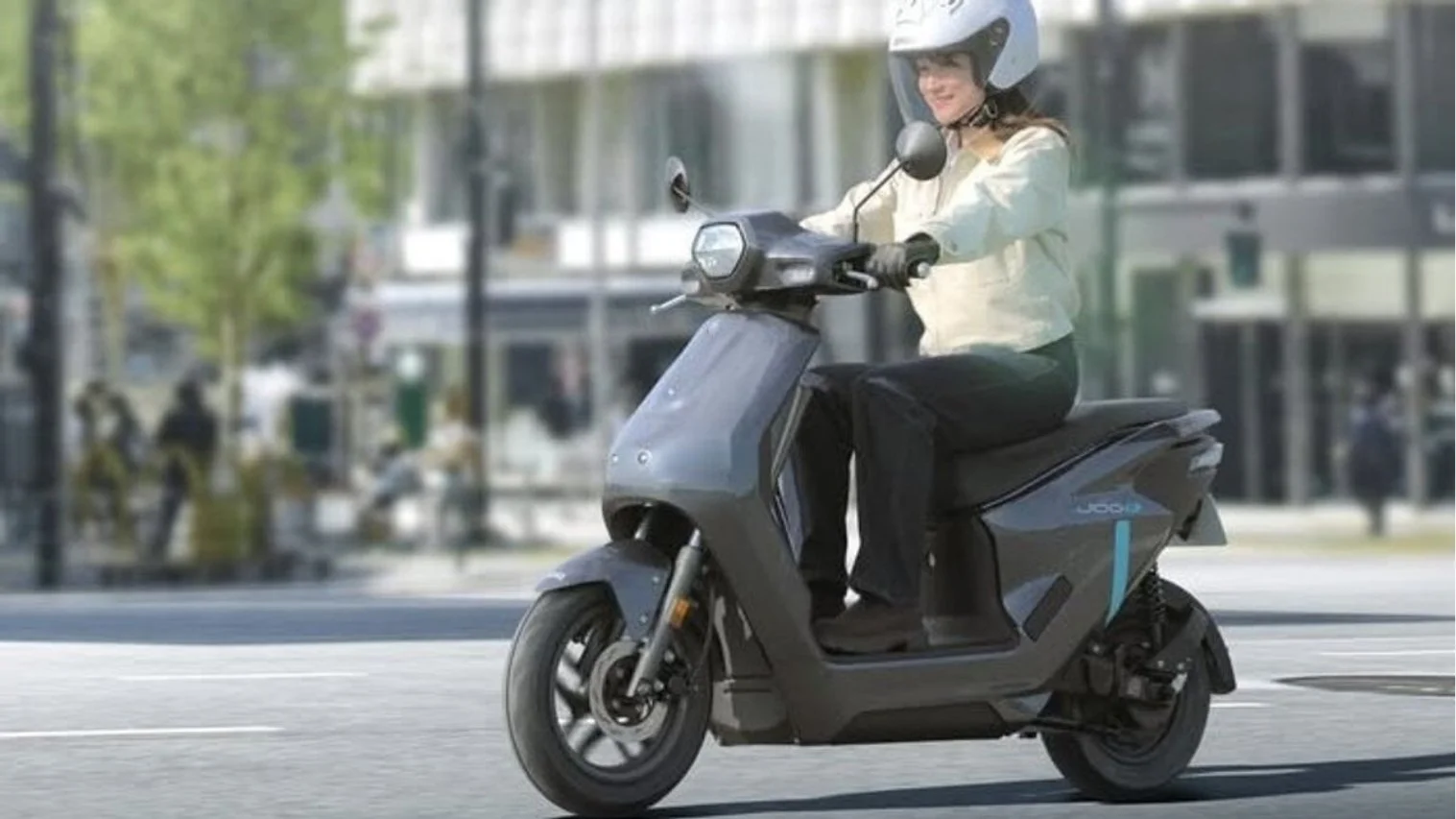
Yamaha Jog E Electric Scooter; Yamaha is doubling down on urban electrification in Japan with the launch of its new Jog E electric scooter – and in a twist that we’ve been waiting years to see, it runs on Honda’s Mobile Power Pack e: swappable batteries.
Yamaha shared on its social media that the Jog E is set to begin a region-limited pre-sale on December 22, 2025, exclusively through Yamaha EV shops in Tokyo and Osaka. This rollout makes it the first Yamaha two-wheeler built around the Mobile Power Pack e system, which is becoming Japan’s de facto standard thanks to the joint battery-swap venture Gachaco.
Yamaha Jog E Electric Scooter Overview
| Feature | Key Specification |
|---|---|
| Model | Yamaha Jog E Electric Scooter |
| Battery System | Swappable Honda Mobile Power Pack e: (1.5 kWh) |
| Range per Pack | ~53 km (city focused) |
| Motor | AC synchronous, ~1.7 kW (2.3 PS) output, 90 Nm torque |
| Dimensions & Weight | 1,795 mm long, 680 mm wide, 93 kg with battery |
| Wheels & Tyres | 12″ front wheel, 10″ rear wheel; 90/90 front, 100/90 rear |
| Brakes | Front disc brake + rear drum with combined braking system (CBS) |
| Suspension | Telescopic front fork, dual rear shock absorbers |
| User Features | Three ride modes, LED lighting, USB port, under-seat storage, LCD screen |
| Launch Price | 159,500 JPY (approx. ₹90,000 equivalent, without battery swap contract) |
| Service Model | Separate battery swap service via an external company |
Yamaha’s Smart Move with Battery Swapping
Yamaha has introduced the Jog E as a compact, practical electric scooter designed primarily for urban commuting. A standout feature is its swappable battery system, powered by Honda’s Mobile Power Pack e:. This means instead of plugging in every time, riders can simply exchange their depleted battery for a fully charged one at dedicated swap stations.
For this model, Yamaha itself sells only the scooter — the battery swap service is handled by a different company under a separate contract. This setup helps keep the upfront cost of the Jog E relatively low while giving flexibility for city riders who want to avoid long charging times.
Performance You Can Feel in the City
The Jog E is driven by an AC synchronous motor producing about 1.7 kW (equivalent to 2.3 PS) and an impressive 90 Nm of torque. While these numbers may seem modest, the torque is tuned for stop-and-go city traffic, ensuring lively acceleration and good responsiveness in dense environments.
Thanks to its lightweight construction — the scooter weighs just around 93 kg including the battery — it remains nimble and easy to handle. The swappable battery adds only a small additional load, making the overall riding experience very well suited for urban commuting.
Design & Practical Features for Daily Use
The design of the Jog E strikes a balance between classic scooter styling and modern, efficient design. It comes in two colour options and features a polygonal LED headlamp, circular mirrors, and clean, sculpted body panels. The all-LED lighting and tidy lines give it a fresh yet familiar look.
Under the seat, there’s functional storage for small items, while the flat floorboard is large enough for practical use. On the front, a small utility pocket holds essentials, and Yamaha has also included a USB Type-A port for on-the-go device charging.
The instrument panel is a compact LCD screen showing range, speed, ride mode, and other crucial data. Riders can choose between three driving modes — “Econ” for maximum efficiency, “Ready” for regular city use, and “Speed” for when they want more performance.
Comfort & Ride Dynamics
Suspension and braking on the Jog E are designed for urban practicality. It uses a telescopic front fork and dual rear shocks to absorb bumps without making the ride harsh. For stopping power, there’s a front disc brake paired with a rear drum brake, and a combined braking system (CBS) links both — improving stability and safety in everyday conditions.
The wheel sizes — 12 inches in the front and 10 inches at the rear — are chosen to balance maneuverability with a comfortable ride feel on typical city roads.
Range, Battery & Service Trade-Offs
Yamaha claims a range of about 53 km per swappable pack, which, while modest, is tailored to the scooter’s core use case of short daily commutes. Since the battery is swappable, users don’t need to rely solely on the scooter’s onboard range — they can simply swap packs when needed, reducing “range anxiety.”
However, this convenience comes with a caveat: the battery pack and the swap service are not included in the scooter’s base price. Riders will need a separate subscription or contract for the swapping service, which adds an ongoing cost.
Market Position & Implications
At a base price of 159,500 JPY (about ₹90,000 equivalent), the Jog E is competitively priced in Yamaha’s domestic market. The swappable battery model helps lower entry cost compared to owning a large, fixed battery pack while appealing strongly to urban commuters who want minimal downtime.
This confirmation of a swapping model also strengthens Yamaha’s commitment to scalable EV infrastructure — especially in dense cities where home charging may not always be feasible.
Final Thoughts
The Yamaha Jog E represents a smart, urban-oriented EV with practical design, efficient performance, and a clever battery-swapping strategy. It may not be built for long highway runs, but for daily city commutes, delivery tasks or economical two-wheeler journeys, it checks every important box.
If Yamaha successfully expands its swapping network, the Jog E could become a blueprint for future city EVs — blending convenience, economy, and sustainability in one lightweight, electric package.

MK Vats is the founder and owner of MotoElectra.com, a leading platform dedicated to cars, bikes, electric vehicles, and automotive technology. With a deep passion for vehicles and innovation, MK Vats has committed his career to sharing comprehensive reviews, latest news, and expert insights for automotive enthusiasts and potential buyers.